GUEST BLOG by SCOTT FRANCISCO: COP 28 Reflections for Planetary Health – Ideas for the brand new, never-been-seen-before…2024!
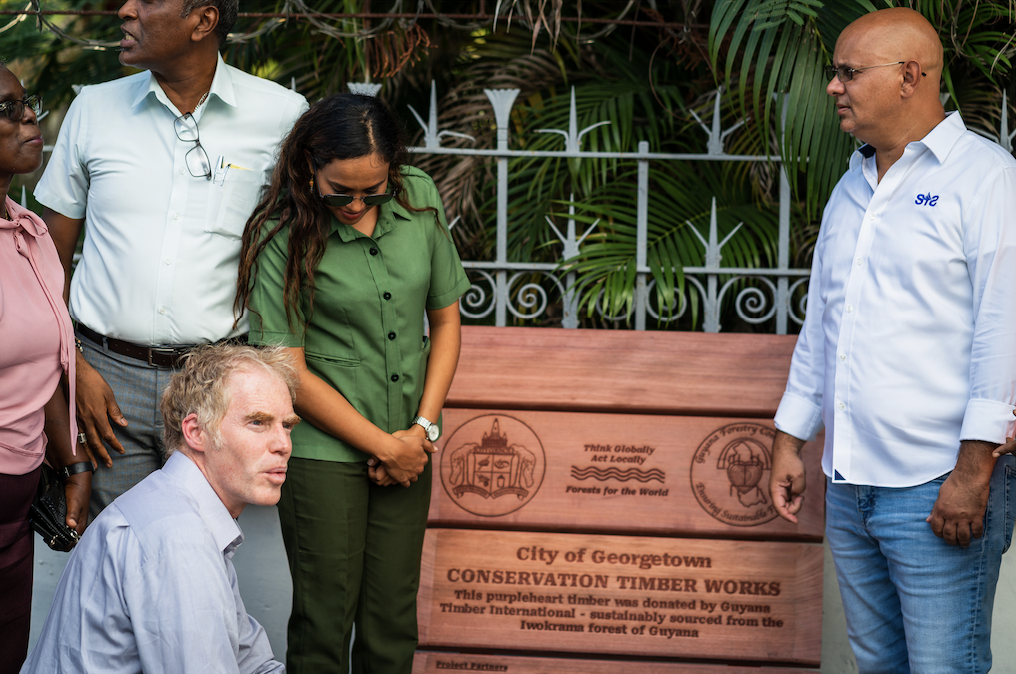
I know I am among friends, so forgive the informality. Editor David, thank you for the opportunity to share a few ideas for a brand new 2024! I am writing from Pilot Projects, a Montreal based systems thinking and design company with the ambitious mission to “co-create a better world”. Our work takes the form of pilot projects that always aim to “lead by doing” whether in material or organization infrastructure.
2023 was a big year for our small team as we laboured over publications, new policies and built projects, in collaboration with partners old and new in many parts of the world. We packed it in (right up to a dramatic finish at COP28 in Dubai, where we led a co-creation workshop), synthesizing ideas and lessons from our work in the dirt and sawdust, on the stage and at the drawing boards (and keyboards) from January 1 to December 31. Here are some of the 2023 highlights we are proud of.
But… were we really able to make any difference? The problems are so big, and so “systemic” that our valiant “pilot projects” seem dwarfed – swallowed up by the scale of the collective and voracious needs, habits, desires and entrenched systems that dynamically and unequally serve billions of people in all parts of the world at all times. Can this AI-satellite-guided fossil-fuel-powered flying-container-ship-freight-train of strip-mined rare-earth metals be slowed down for even one second? How would I get my Amazon Prime packages? What about my Netflix and Starbucks?
Pilot’s contribution to “planetary health” is mostly in two areas: built environment sustainability (how we can make more livable and less harmful buildings) and the dynamics of forest geography (how we can conserve, use, preserve and restore land that is, or should be, predominantly populated by trees in different parts of our world).
At COP28 this year country leaders from all over the world finally woke up to the interdependent role of the built environment and forests which, taken together, constitute about half of all GHG emissions. Building on the important Glasgow Declaration on Forests from COP26 in 2021, we saw at COP28 the launch of the FCLP’s Greening Construction with Sustainable Wood (fitting within the larger context of the Buildings Breakthrough announcement at COP28 where many countries committed to “net zero” construction by 2030!).
This was a long-awaited tailwind for those of us co-creating a future where “forest positive” urban buildings become the new norm. We know that for humans to thrive on the planet in the future we’ll need to build a lot more climate-neutral “regenerative” buildings and cities (which means these will mostly be made of wood, bamboo and other bio-based materials). At the same time, we’ll also need more forests of all kinds. We need mangroves and rainforests, boreal spruce, Appalachian ash, Balinese bamboo and Australian eucalypts. More and healthier forests, and more timber for more and healthier buildings.
This goal can seem like a distant utopian mirage when we are working in silos. And there have been plenty of critics and critiques of its viability. But when we have all the right people in the room the pieces start to come together. It becomes easier to say “we can do this!” And it becomes unavoidable that these needs should be connected in a virtuous circle, where more of one means more of the other. This is systems change at the scale of our big challenge. Is it actually feasible or too good to be true?
As one of many teams out on the leading edge of climate action, forest conservation and built environment decarbonization along with hundreds of other teams, we are working hard to acquire “a very particular set of skills” that can be put to use here. What are these skills?
Collaboration simply means “working together”. If this seems like a no-brainer, it is really the exact opposite. It is an “all-brainer” special forces skill set. It will require all of our brains (and most of our bodies!). Collaboration is how we address big challenges that we cannot face alone, as organizations or even governments. But to effectively “scale-up” collaboration to meet the enormity of our challenge we have to move beyond simply working together. Enter “systemic collaboration” (otherwise known as teamwork). Systemic collaboration assumes that there is a design to our collaboration, wherein our efforts are applied within a larger more complex systems reality. Our efforts are not merely serving our direct goals as an organization, but serving and leveraging other actors in a way that is sometimes counterintuitive and always exponentially powerful. Think of the way the many parts of a bicycle or a human body “work together” to co-produce a result that is unimaginable without the exacting design configuration of the whole system. By itself a bike chain or a spinal cord can do nothing. But put into a designed relationship with the other parts and we have a miracle, the ability to really do something.
Our Pilot Projects workshop at COP28 brought together world leaders in the space of forest-positive buildings. We first resolved that a platform to support this kind of systemic collaboration was much needed, and then defined some of the key components of such a system. We are now exploring the funding mechanism and organizational structure of this ambitious concept. Meanwhile “God is in the details” so there is much to do with no time to spare! Let me know if this is an area of professional interest and/or if you have a particular skill and would like to be involved.
After this intense year and intense COP workshop I ended up formulating three questions for all who are working in the climate action space, or who would like to. These seem like simple questions, but they each carry a profound subtext. I am now working with them on a daily basis for our own organization and our partners. I think that when taken as a non-hierarchical set they may offer a window into what systemic collaboration looks like. I would like to hear feedback from anyone after applying these questions to their own work and organization.
Here are my three interdependent non-hierarchical questions for every individual and organization of any size to ask, whether business, NGO, Government, community group, or other:
- How can I/we help? (A commitment by an individual or organization to a mutually understood shared goal)
- What is my role? (Subjecting my own efforts and capabilities to work within a larger system that is designed with specific interdependent components and relationships to achieve the shared goal)
- How could the collaborative system be redesigned (Recognizing that the assumptions, components and relationships in the current system are in constant need of refinement, and even complete reconfiguration, to meet the current goals, and address new contextual factors and new goals that are likely to emerge).
HAPPY NEW YEAR
Scott Francisco, Montreal, Quebec
 PLANETARY HEALTH WEEKLY