BEZ’S BLOG #23: “We Have No Free Will”
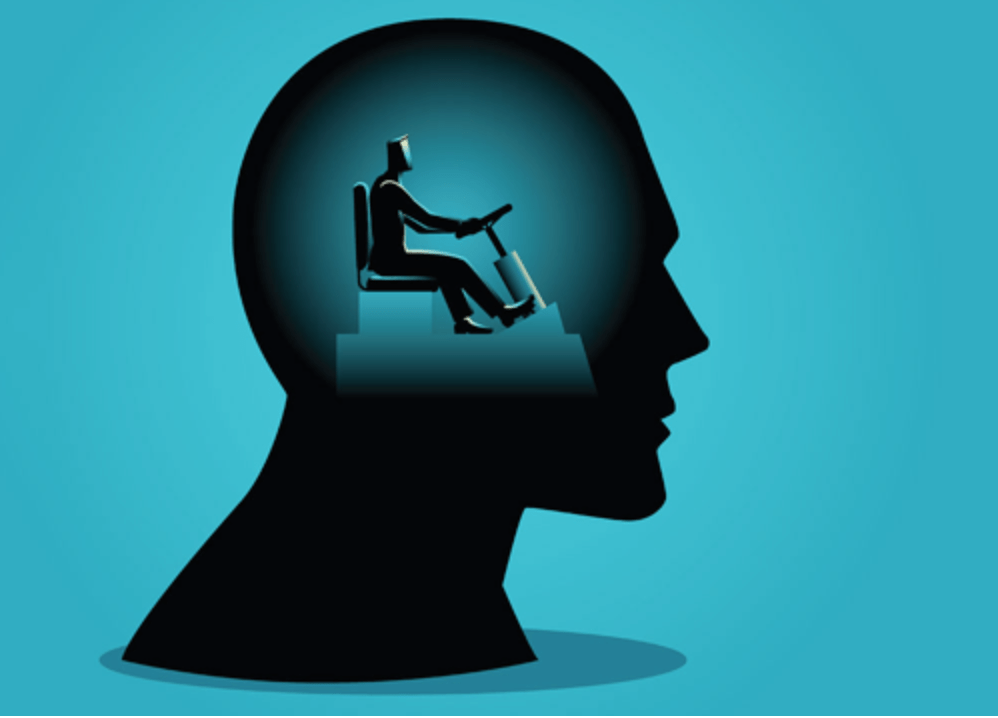
| Robert Sapolsky, the neuroscientist and Stanford sage has come out with a new book: Determined: A Science of Life Without Free Will. He argues that we have no free will because of our individual histories that go back milliseconds, to seconds, to hours, to days, to years, to preconception, and beyond to the arrival of humans on the planet. Our actions are for the most part determined by that history.His more than 500 pages comprises a huge serving of food for thought. We are who we are because of how different societies have created the conditions for our outcomes. His very scientific reasoning, with detailed documentation, comes from many experiences including serving as an expert witness for public defenders in criminal trials. People commit crimes because of past issues in their lives that for the most part they are not responsible for. The real criminals, like the banksters responsible for the 2008 economic meltdown, are never brought to trial. We can only speculate about the reasons for this criminal behavior.He cites abuse in childhood as a promoting factor for so many behaviors that are not healthy. We covered Adverse Childhood Experiences (ACEs) in the December 2022 blog. I find it difficult to say I did this and that because I made choices along the way. Instead I see a series of happenings in my life that took me on a trajectory that have resulted in the outcomes I now have at age 80. Consider me as a case study and what might be lessons learned appropriate for readers of this Weekly. My parents immigrated from Ukraine, my father in 1926 at age 16 and my mother a few years later. They came from peasant families south of Lviv in the western part of the country (though, of course, it wasn’t called Ukraine then). My father left as his father died in the 1918 influenza pandemic and he didn’t get along with whom his mother remarried. My mother left because her sister had immigrated to Ontario and she followed. Both of my parents had only a couple of years of schooling in the Ukraine.Eventually they met in Toronto and were married two weeks later! My father had learned to repair shoes and worked in a renovated garage in the west end of Toronto. They bought a house nearby. My brother, Paul, was born and I arrived two years later weighing 9 lb. 6 oz. My brother got sick one day and later that same day died in my mother’s arms. Our family transformed to become one of constant grief and sorrow. Our only trip was the weekly excursion to the cemetery where my brother was buried.The stories my mother told me were that Paul would build something out of blocks and I would knock the structure down. That story instilled a sense that perhaps I caused his death. Later as I came to understand attachment theory, discussed in Blog #11 I saw myself as being securely attached until my brother’s death. This affected me later in life in some stressful situations when I saw myself reverting to being a two-year old. My good birthweight is likely the result of less stress my parents had before my conception, and their joy at welcoming a second child into the world. As we have learned previously this is a healthy sign for outcomes later in life. I stumbled into learning first aid as a kid and being enamored by the St. Johns Ambulance Corps in Toronto. These volunteers attended events to provide first aid. Saving lives became my subliminal goal even to the point of getting credentialed by the Royal Life Saving Society Canada to teach water safety skills and even examining for them.I grew up in the working class Toronto neighborhood of East York. I was good at school and eager to learn advanced concepts of physics and mathematics. I read a graduate textbook Sourcebook on Atomic Energy whose contents were confusing but tantalizing. Around age 13, I taught myself calculus from a “Teach Yourself…” series. The 1957 Russian launch of Sputnik was the catalyst in my wanting to study science. I was accepted into the rigorous Mathematics, Physics, Chemistry course of study at the University of Toronto in which half the first year class failed. I don’t recall making decisions to do any of this, it just seemed to happen. No free will that I was aware of. The rest of my life has been similar. I just sort of fell into doing things that profoundly affected who I was and who I became. This led to graduate study in mathematics at Harvard followed by a year trekking in Nepal, then medical school at Stanford, which led to setting up a community health project in Nepal, and many more steps that ended up with my wanting to understand population health.How about you, the reader? Do you feel personal agency in your life? Or does life just happen? The whole point of our lack of free will is that we have to structure society so that good things happen. Sapolsky implies that in the second half of his book without being direct about the political needs for a healthy society. In a previous book, Why Zebras Don’t Get Ulcers, he says If you want to increase your chances of avoiding stress-related diseases, make sure you don’t inadvertently allow yourself to be born poor.The question becomes what happens to society when enough people believe that we do not have free will? Will it run amok? Perhaps the answer is found in who we have been for most of human existence on the planet. Hunter-gatherers or forager-hunters. Individual free will did not exist then, but the small groups, where everyone knew everyone else, had to be completely cooperative. They didn’t have stuff. But there was vigilant sharing of food. In most environments where they lived the basic needs of food and shelter could be satisfied with a few hours of gathering foods (mostly by women) that grew wild and every few weeks the men would return from a hunt with the kill. Where nothing grew, such as around the North Pole, Inuit developed ingenious tactics to survive and thrive on the wild animals there. Cooperation and prosociality were the norms. This was discussed in Blogs 19 and 21. Once we made the transition in the neolithic to agriculture, health declined and with civilization we had to deal with strangers. Stable, familiar and transparent relationships where reciprocity was valued broke down when there were others around. Then religions with moralizing gods popped up to keep us in line and make you responsible for your actions. What about atheists? People associate atheism with moral norm violations.I don’t call myself an atheist (there is no god), nor an agnostic (I don’t know nor care), but a nontheist. Theism is not important to me. Maybe that is why I’m accepting that I have no free will.How do you evaluate people? By what they say or what they do? Sapolsky’s book goes on at length here. He uses biological examples such as the slug Aplysia californica.If we don’t have free will, then what happens is decided by circumstances around us. When change happens, it is because we are changed by the world around us. And Sapolsky says “we are also changed as to what sources of subsequent change we seek.” He goes on to talk about the history of the falling sickness, epilepsy. Historically there were many explanations based on free will that are too numerous to describe here. Eventually we came to see it as a neurological disease, not possession. He does this with other conditions and considers criminality.The last chapter of “Determined” is titled: If You Die Poor. He points out that it is not your fault, if you are born poor, but in a meritocracy it is your fault if you die poor. Nothing can be further from the truth. As an emergency physician I used to blame my patients for their bad behaviors, such as smoking, that caused their problems for which they came to the ER. Once I learned about Japanese men smoking at much higher rates than in America, and not suffering so many of the harms of cigarettes, I stopped blaming my smokers and other patients for what I thought was how they brought me grief in my trying to treat them. Blame is similar to hate. It doesn’t help to hate people. This gets us to the upstream metaphor produced by the Department of Health in Hawai’i, the healthiest U.S. state, we explored in Blog #4 in 2022. Political context and governance is the most important determinant of our health. How can accepting our lack of free will help us understand what is going on today? We are destroying much life on the planet through various actions done by collective entities (people and corporations) that are too-rich and privileged, and who act in selfish interests to garner power and wealth. The perpetrators do not consider how their actions result from that privilege. Working together we can affect the political structure of society in various ways. Sapolsky stops short on how to do this. But questioning having free will is the first step to creating salutary conditions that we have had for most of human existence. Stephen Bezruchka, Seattle, Washington |
 PLANETARY HEALTH WEEKLY