BEZ’S BLOG #18: “POWER AND POLITICS”
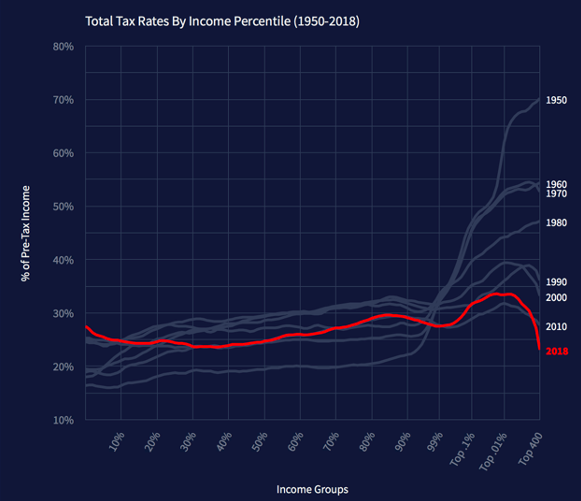 Credit: taxjusticenow.org Credit: taxjusticenow.orgLast month’s blog expressed concern that the United States could be doing a replay of what happened to health and health status in Russia after the downfall of the Soviet Union in 1991. Mortality there increased and life expectancy has only now returned to about where it was before the breakup. U.S. life expectancy is where it was in 1996. Causes for both are similar, namely the transfer of wealth to the top 1% or so. In Russia wealth transfer was done very quickly, taking only a couple of years for the oligarchs to become rich beyond their wildest dreams. In the United States the process has been slower, coming on strong with the election of Ronald Reagan as president in 1980 and ensuing neoliberal policies continuing to the present. The staggering amount transferred from the bottom 90% to the top 1% is on the order of $50 trillion. The population poison administered was political. It didn’t happen because the top 1% just worked trillions of times harder than the bottom 90%. The antidote, therefore, also has to be political. But what does it mean to be political? Defining politics is itself a political act. But consider politics as who gets what, when and how. Globally today the who can be considered a tiny fraction of the world’s richest, perhaps numbering a few million out of the eight billion people on the planet. They can be found in almost every nation, and what they get is a disproportionate share of each country’s resources, be it cash, foreign bank accounts, natural resources, shares in exploitive industries, and the attendant power that accrues to such people. When the largest transfer occurred varies, beginning with monarchy, slavery, colonization, advent of corporations, but a substantial proportion has happened in the last forty years with the increasing acceptance of neocolonial and neoliberal political policies. The how refers to most people accepting, either tacitly or with awareness, that letting the rich have ever more is in their best interests. At best, they recognize they have little power to change the situation, but do take advantage of it. Globally income and wealth inequality are rising everywhere. Thomas Piketty’s 2014 Capital in the 21st Century further sounded the alarm to a large audience. With millions of copies sold and being translated into many languages, the book has become the most discussed work of economics in recent history. It clearly exposed the vicious cycle of wealth influencing politics to create more inequality and that inequality creates more wealth, most of which is usurped by those at the top and creating huge underclasses. How to stop that savage loop from destroying ourselves and the planet is the challenge. Piketty humbly writes: “There is one great advantage to being an academic economist in France: here economists are not highly respected in the academic and intellectual world nor by political and financial elites. Hence they must set aside their contempt for other disciplines and their absurd claim to great scientific legitimacy, despite the fact they know almost nothing about anything.” In the U.S. and the West in general economists have managed to present a powerful knowledgeable persona to create delusion in the face of their ignorance. Inequality as the most pressing challenge the world faces today is an idea whose time has not yet come. Though as an open-and-shut case, it should have exploded decades ago. To deny the impact of rising inequality on declining health is like saying the sun orbits the earth. The rise of inequality in the United States, as suggested by the $50 trillion transfer, is more than the death of the canary in the coal mine, the miners are also succumbing as mortality rates indicate. What then is the antidote to this most potent of poisons? Pre-distribution is the antitoxin required. We must structure society, the U.S. in this case, so that we don’t have to re-distribute the massive amounts from the rich to the rest of us. They certainly don’t want to be generous and will resist any attempts to take their ill-gotten gains, which they even try to hide in various tax havens. Transactional power can limit choices in a society, mainly between labor and capital. Laws are currently designed to increase the power of capital over labor in the market. Corporations have been given legal identity in their quest to reproduce capital for their shareholders. The disappearance of unions in the U.S. speaks to that. Today unions try to rise from their graves. Governments set the rules for those markets which pre-distribute income. This happens before taxation which represents redistribution. The rich and powerful have gamed the system to pay as few taxes as possible or none at all. When federal, state and local taxes are combined the richest 400 Americans pay the lowest rate of all income groups. They like that and do their hardest to keep it that way. Gilens and Page (2014) looked at almost 1800 policy decisions in the U.S. Congress between 1981 and 2002 before the Supreme Court’s ‘Citizens United’ decision in 2010 that opened the floodgates to increase inequality even more. They considered preferences of U.S. citizens and found they had almost no influence in the laws passed. Wall Street, big corporations, and wealthy individuals had all the force. How is this possible, what is their power process? One way is to keep items off the agenda. Recall the Patient Protection and Affordable Care Act of 2010. Single payer healthcare which the majority of the public wanted, Obama said was “off the table.” Power is a zero-sum game. When those at the top have more, it comes from those at the bottom. Wealth begets power and power begets wealth. Our vicious cycle. Among the forms of pre-distribution to benefit the rest of us are to limit patent and copyright protection. New drugs in the U.S. are protected from generic equivalents for 20 years and laws permit extension for quite a few more years. Such laws are not there to benefit residents but to increase profits for the already too rich. Software copyright protection extends to 95 years. The copyright on Mickey Mouse was due to expire in 1998 but Disney lobbyists converged on Washington D.C. and had it extended it to 2024. And after that? I’m sure schemes are afoot, stay tuned. These examples of pre-distribution are everywhere but mostly hidden from prime-time discussion. Why? Those in and with power are afraid of people power, the other 300 million or so citizens. Recognizing our power through collective action, including the vote, is the antitoxin needed to reverse the health decline in the U.S. and not follow Russia’s course. The world, organized into nation states, is a very unstable place today because of this inequality, including the climate and biodiversity crises. Next month we look even further upstream to question this configuration of wealth and power and whether it serves us. Stephen Bezruchka, Seattle, WA Planetary Health Weekly, June 15, 2023 |
| Credit: taxjusticenow.org Last month’s blog expressed concern that the United States could be doing a replay of what happened to health and health status in Russia after the downfall of the Soviet Union in 1991. Mortality there increased and life expectancy has only now returned to about where it was before the breakup. U.S. life expectancy is where it was in 1996. Causes for both are similar, namely the transfer of wealth to the top 1% or so. In Russia wealth transfer was done very quickly, taking only a couple of years for the oligarchs to become rich beyond their wildest dreams.In the United States the process has been slower, coming on strong with the election of Ronald Reagan as president in 1980 and ensuing neoliberal policies continuing to the present. The staggering amount transferred from the bottom 90% to the top 1% is on the order of $50 trillion. The population poison administered was political. It didn’t happen because the top 1% just worked trillions of times harder than the bottom 90%. The antidote, therefore, also has to be political.But what does it mean to be political? Defining politics is itself a political act. But consider politics as who gets what, when and how. Globally today the who can be considered a tiny fraction of the world’s richest, perhaps numbering a few million out of the eight billion people on the planet. They can be found in almost every nation, and what they get is a disproportionate share of each country’s resources, be it cash, foreign bank accounts, natural resources, shares in exploitive industries, and the attendant power that accrues to such people. When the largest transfer occurred varies, beginning with monarchy, slavery, colonization, advent of corporations, but a substantial proportion has happened in the last forty years with the increasing acceptance of neocolonial and neoliberal political policies. The how refers to most people accepting, either tacitly or with awareness, that letting the rich have ever more is in their best interests. At best, they recognize they have little power to change the situation, but do take advantage of it.Globally income and wealth inequality are rising everywhere. Thomas Piketty’s 2014 Capital in the 21st Century further sounded the alarm to a large audience. With millions of copies sold and being translated into many languages, the book has become the most discussed work of economics in recent history. It clearly exposed the vicious cycle of wealth influencing politics to create more inequality and that inequality creates more wealth, most of which is usurped by those at the top and creating huge underclasses. How to stop that savage loop from destroying ourselves and the planet is the challenge.Piketty humbly writes: “There is one great advantage to being an academic economist in France: here economists are not highly respected in the academic and intellectual world nor by political and financial elites. Hence they must set aside their contempt for other disciplines and their absurd claim to great scientific legitimacy, despite the fact they know almost nothing about anything.” In the U.S. and the West in general economists have managed to present a powerful knowledgeable persona to create delusion in the face of their ignorance.Inequality as the most pressing challenge the world faces today is an idea whose time has not yet come. Though as an open-and-shut case, it should have exploded decades ago. To deny the impact of rising inequality on declining health is like saying the sun orbits the earth.The rise of inequality in the United States, as suggested by the $50 trillion transfer, is more than the death of the canary in the coal mine, the miners are also succumbing as mortality rates indicate.What then is the antidote to this most potent of poisons? Pre-distribution is the antitoxin required. We must structure society, the U.S. in this case, so that we don’t have to re-distribute the massive amounts from the rich to the rest of us. They certainly don’t want to be generous and will resist any attempts to take their ill-gotten gains, which they even try to hide in various tax havens.Transactional power can limit choices in a society, mainly between labor and capital. Laws are currently designed to increase the power of capital over labor in the market. Corporations have been given legal identity in their quest to reproduce capital for their shareholders. The disappearance of unions in the U.S. speaks to that. Today unions try to rise from their graves. Governments set the rules for those markets which pre-distribute income. This happens before taxation which represents redistribution. The rich and powerful have gamed the system to pay as few taxes as possible or none at all. When federal, state and local taxes are combined the richest 400 Americans pay the lowest rate of all income groups. They like that and do their hardest to keep it that way.Gilens and Page (2014) looked at almost 1800 policy decisions in the U.S. Congress between 1981 and 2002 before the Supreme Court’s ‘Citizens United’ decision in 2010 that opened the floodgates to increase inequality even more. They considered preferences of U.S. citizens and found they had almost no influence in the laws passed. Wall Street, big corporations, and wealthy individuals had all the force.How is this possible, what is their power process? One way is to keep items off the agenda. Recall the Patient Protection and Affordable Care Act of 2010. Single payer healthcare which the majority of the public wanted, Obama said was “off the table.” Power is a zero-sum game. When those at the top have more, it comes from those at the bottom. Wealth begets power and power begets wealth. Our vicious cycle.Among the forms of pre-distribution to benefit the rest of us are to limit patent and copyright protection. New drugs in the U.S. are protected from generic equivalents for 20 years and laws permit extension for quite a few more years. Such laws are not there to benefit residents but to increase profits for the already too rich. Software copyright protection extends to 95 years. The copyright on Mickey Mouse was due to expire in 1998 but Disney lobbyists converged on Washington D.C. and had it extended it to 2024. And after that? I’m sure schemes are afoot, stay tuned.These examples of pre-distribution are everywhere but mostly hidden from prime-time discussion. Why? Those in and with power are afraid of people power, the other 300 million or so citizens. Recognizing our power through collective action, including the vote, is the antitoxin needed to reverse the health decline in the U.S. and not follow Russia’s course.The world, organized into nation states, is a very unstable place today because of this inequality, including the climate and biodiversity crises. Next month we look even further upstream to question this configuration of wealth and power and whether it serves us. Stephen Bezruchka, Seattle, WA June |
 PLANETARY HEALTH WEEKLY